
Retail and craftA brand reads a first email for one thing: whether you know what it makes.
What can a system carry in a retail and craft business?
Which companies to write to, and what to say to each one. A maker selling to brands has more good fits than time to research them, and one wrong detail costs a relationship. A growth system researches each company, drafts the first email in the retailer’s voice, and sends only after the owner has read the day’s queue.
How it sounds from inside.
- There are more brands that might fit than anyone has hours to research properly.
- One email with a wrong detail about what a brand makes costs more than the reply it would have earned.
- Selling to a home market and selling abroad take different information, and mixing them up wastes the first message.
- A reply changes everything, and the moment someone answers, the account needs to move straight to a person.
Growth systems.
The risk sits in the two decisions before a first email goes out: which companies fit, and what to say to each one. That is what a growth system carries: every brand researched and scored against the retailer’s own criteria, a product matched to what the brand makes, and a first email that has to pass a check on the retailer’s voice before it can be queued. Only a plain, rule-bound sender is allowed to put an email in front of a company.
The boundaryNothing goes out in the company’s name without clearing the line the company draws: a person’s approval, a check on its voice, or a daily window to read the queue and pull anything.
What a growth system is built fromRetail and craft, as built.
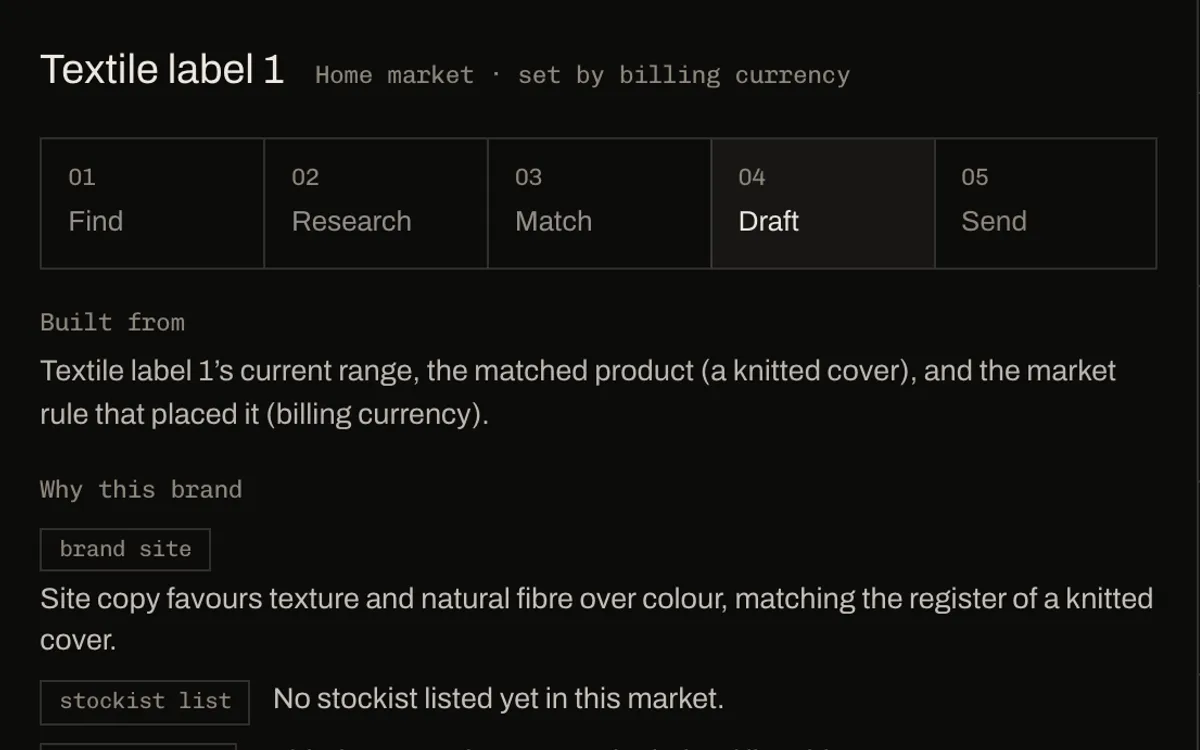
- 01FindBrands that fit the retailer’s criteria, from sources that show what they make and sell.
- 02ResearchEach brand’s site is read, scored against the criteria and placed in its market by rule.
- 03MatchA product from the catalogue is matched to what the brand makes, and the right person found.
- 04DraftThe first email is drafted and must pass a check on the retailer’s voice before it can be queued.
- 05SendA plain sender with no model in it sends what is due, within daily and per-inbox limits.
What we would map first.
- Which brands fit
Brands that match the retailer’s own criteria, found from sources that show what they actually make and sell.
- What to say to each one
A product from the catalogue matched to what the brand makes, and the right person to write to.
- What a person checks
The queue a person reads each day before anything goes out, and can pull from at any time.
- What happens after a reply
The moment a company answers, where the account goes next and who owns the conversation.
Before you commission one in retail and craft.
- Who reads the queue before it sends?
- The retailer, once a day. Nothing goes out during the window it takes to read the day’s queue and pull anything.
- What happens once a brand replies?
- Replies go straight to a person. The moment anyone at a company answers, the account belongs to that conversation and comes out of the outreach queue.
- Can it write differently to companies at home and abroad?
- Yes. Which market a company belongs to is decided by rule, from signals like currency, phone prefix and domain, so the two get separate volumes and their own send windows.
Where would it start in your company?
The first conversation is with the people who would build it. If there is a fit, the Consult comes next.