What is an operations system?
An operations system takes over the work a company’s team repeats by hand. Requests, orders and documents are read as they arrive, routed by the company’s own rules, signed off by a person where it matters and kept in one record the team can measure. It is built around one company and run after launch.
- The situation
- Your operations were built for an earlier way of working.
- What it is
- Systems that take over the work your operation repeats by hand.
- What changes
- The same team carries more of the operation.
What it shows up as
Names you may already use for it. Each is one arrangement of the parts below, fitted to one company.
- Agentic ERP, built around the one you already runSee one
- One inbox for every client channelSee one
- A case file that follows each customerSee one
- Invoices, orders and forms read into fields
- Approvals and hand-offs that chase themselves
- A morning view of what is stuck, and why
- Or the one your operations run on that has no name yet.
What gets built
The parts every operations system is made from. Which ones yours needs, and in what order, the Consult decides.
capture
Requests, orders and documents come in from wherever they arrive and are read into structure.
route and act
Each item goes to the right step or person, by the company’s own rules.
sign-off
 a person decides
A person approves the steps the company has marked as theirs.
follow through
Nothing stalls between handoffs; the system chases what is waiting.
one record
Every item keeps one history, written as things happen.
- Answer every client from one inbox, whichever channel they wrote on.Running (our own)
visibility
What is moving and what is stuck, measured against the baseline from the Consult.
Operations systems, as built.
Each one is an instance of the flow above, fitted to one company.
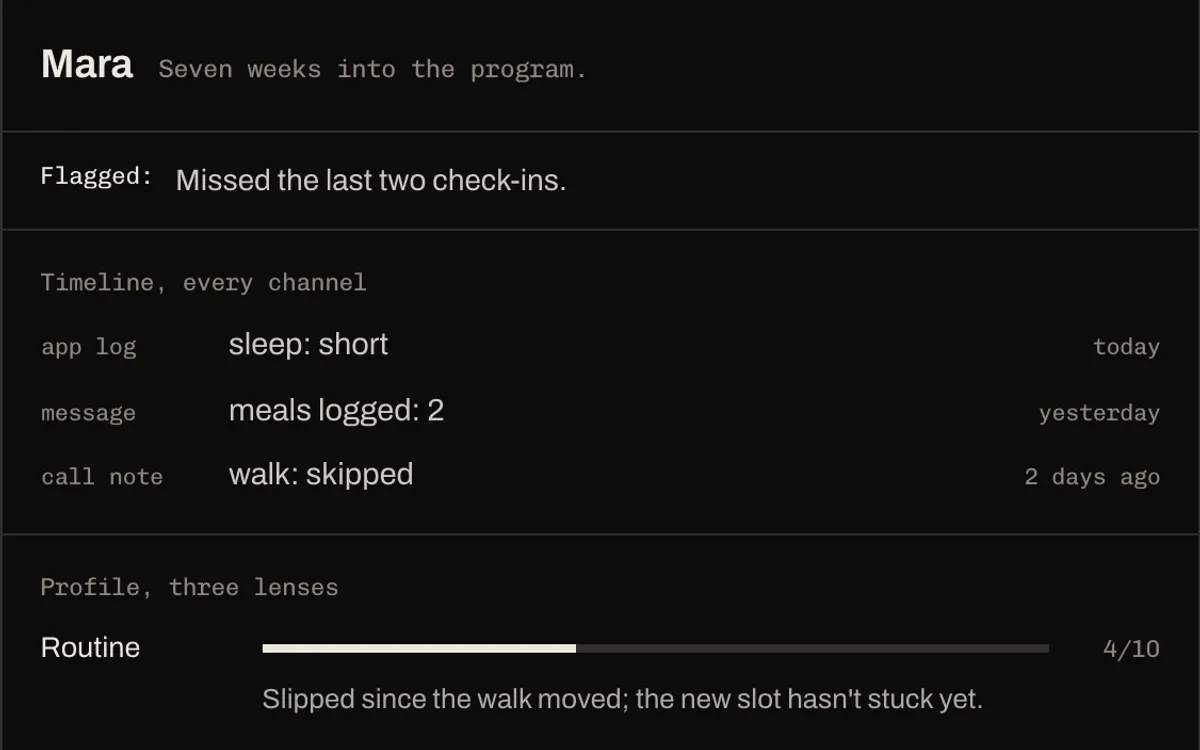
Health coaching
Put each participant’s full context in front of their counsellor.
Logs, history and the last conversation on one screen per participant, with the next nudge drafted.
DesignedOpen the demo
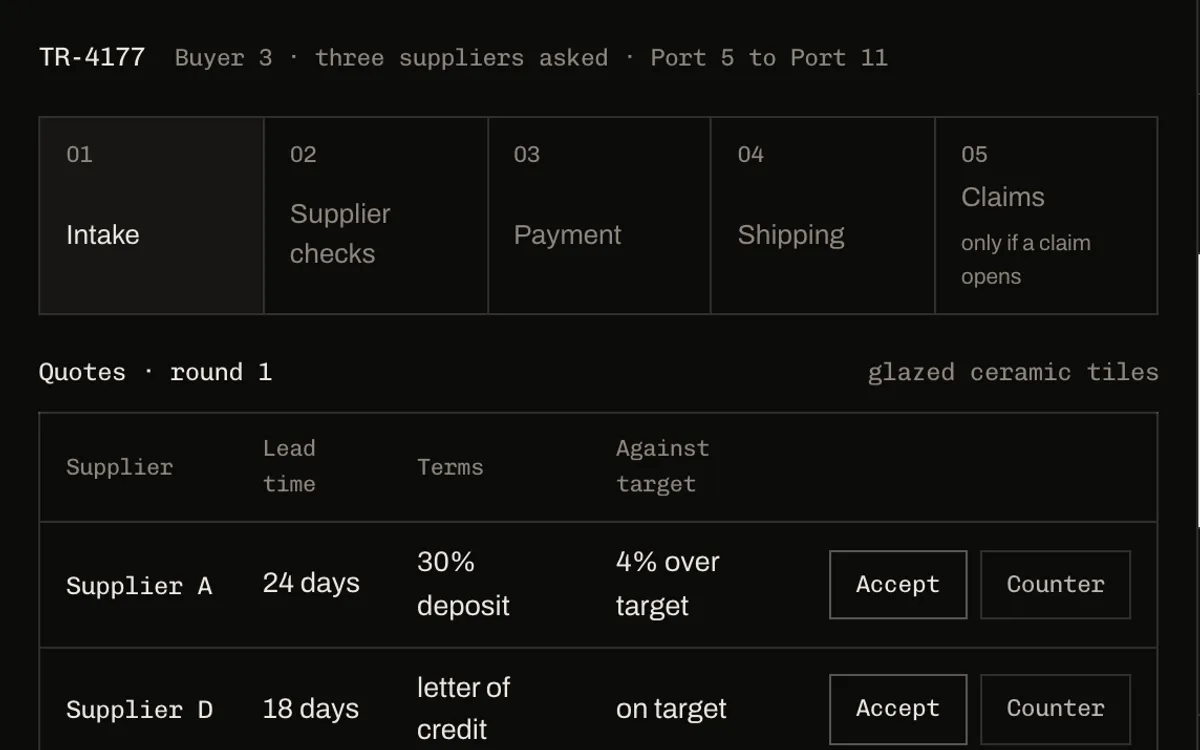
Trade and logistics
Move a cross-border order from quote to delivery without the email chain.
One system carries the order through supplier checks, escrow, letters of credit, shipping and claims.
DesignedOpen the demo
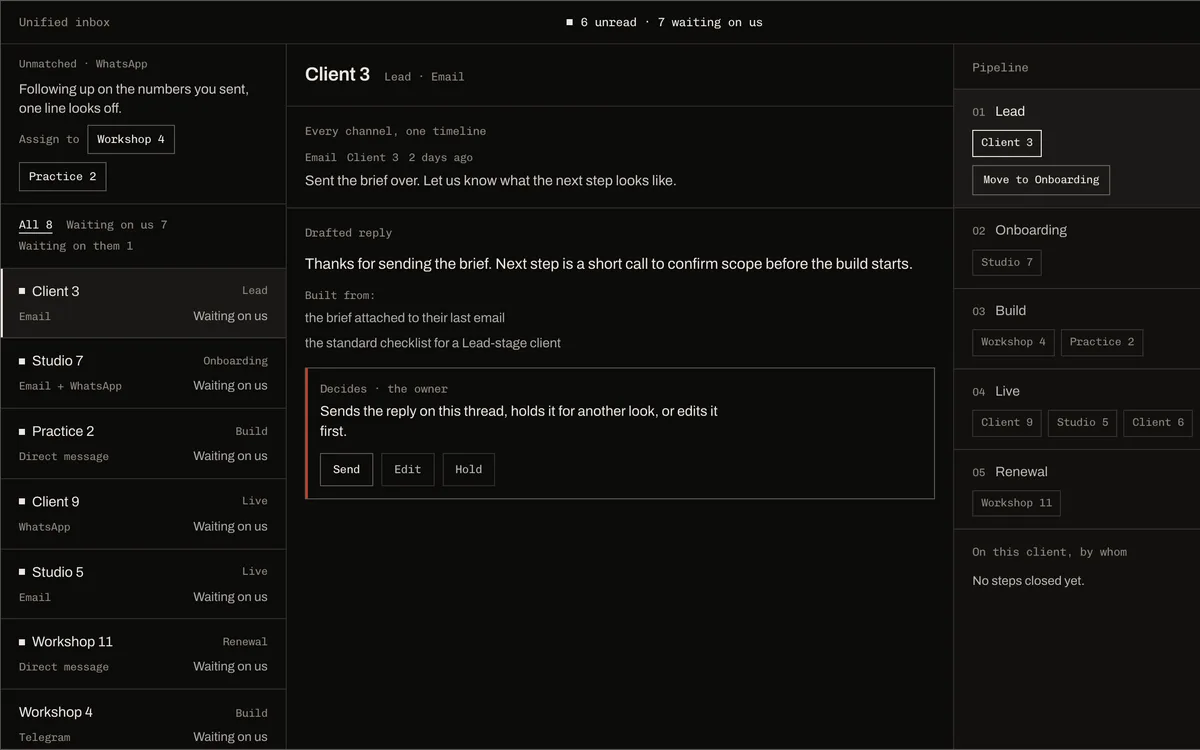
Our own · Agency Ops
Answer every client from one inbox, whichever channel they wrote on.
Email, chat and direct messages land in one record, sorted as they arrive, with the pipeline kept on the same data.
Running (our own)Open the demo
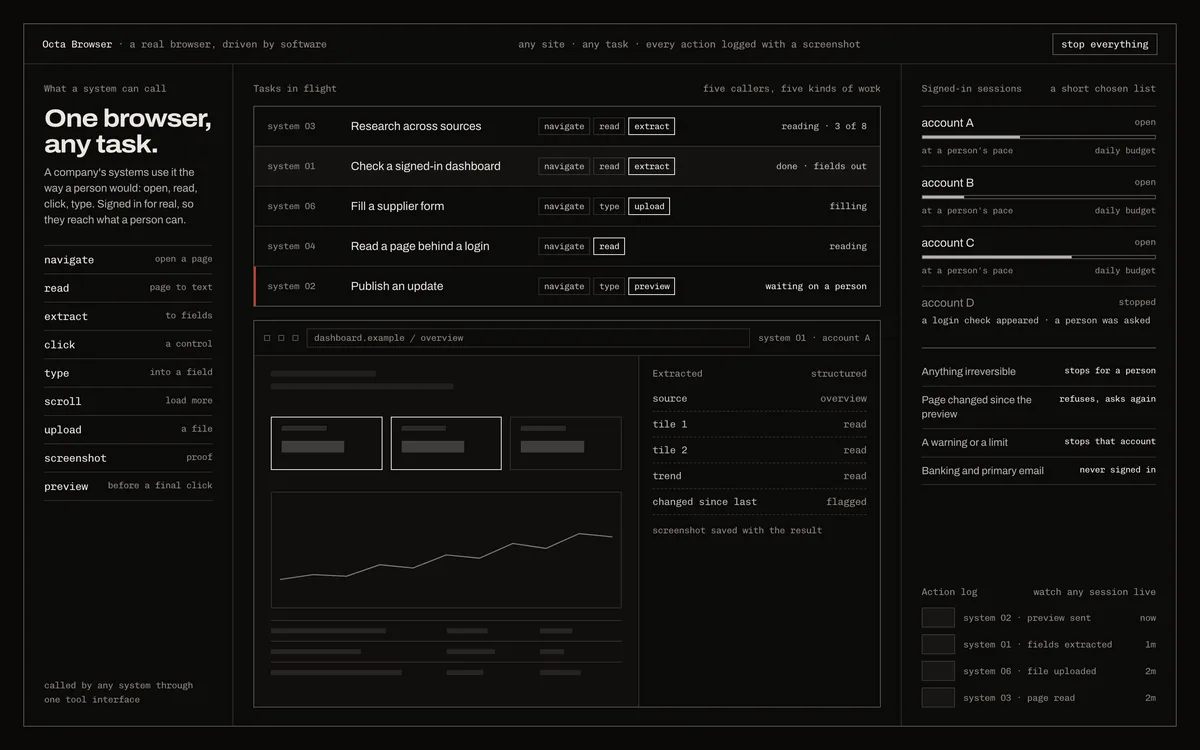
Our own · Octa Browser
Let every system use the web the way a person does.
A real, signed-in browser any of our systems can drive for any task, from research to forms to dashboards.
Running (our own)Read the case study
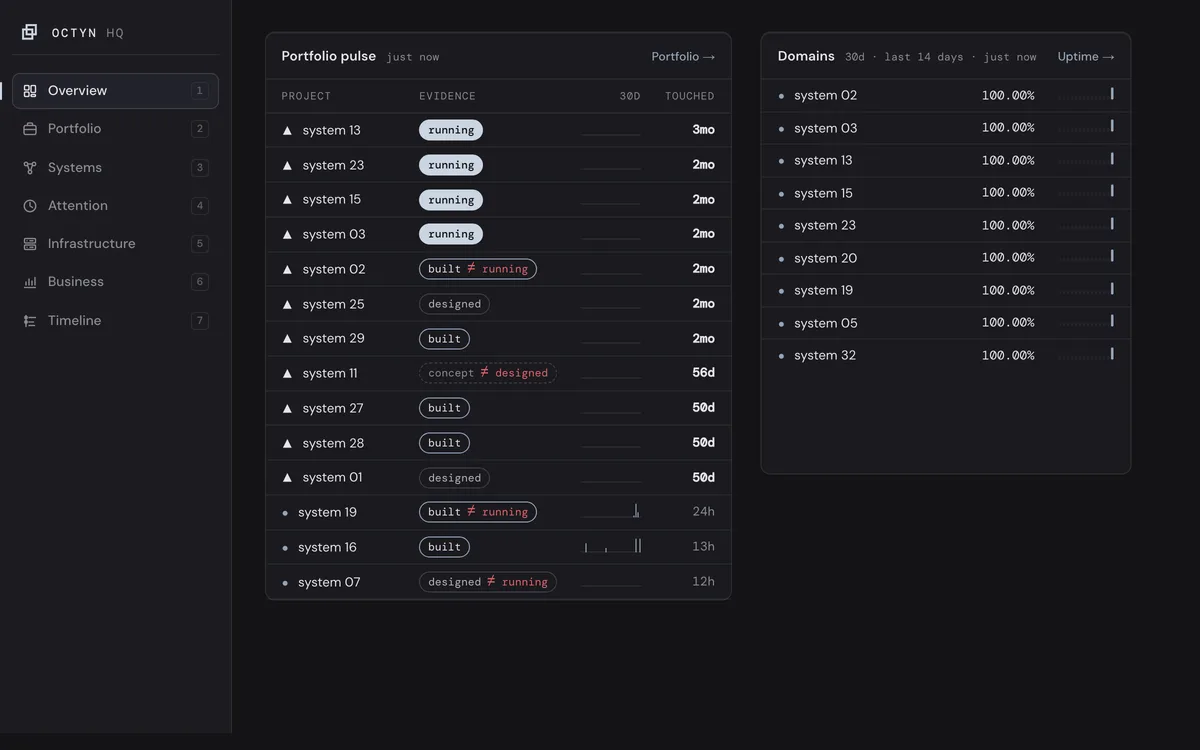
Our own · HQ
Know where every project stands without asking anyone.
Every machine reports in every quarter hour, so drift, momentum and uptime for every project sit on one private panel.
Running (our own)Read the case study
Is this you?
Tick what is true of your company.Either way, there is a next step that fits.
Before you commission an operations system.
- Does it replace what we use today?
- No. It reads from and writes back to what your team already uses, and gives a home to the steps that live only in email or spreadsheets.
- What if our process changes?
- The system is re-set. Running it after launch includes changing it as your company changes: a new step, a new rule, a new team.
- Who approves what?
- You decide. Any step you mark as a person’s waits for that person. The system prepares it and chases it, and never closes it on its own.
Where would it start in your company?
The first conversation is with the people who would build it. If there is a fit, the Consult comes next.