Configuration
What it meansA value already exists for this. Thresholds, keys, caps, windows, which provider is primary
What it costsMinutes.No deploy, no review, no risk to anything else
Changing an AI workflow six months later lands in one of four buckets: configuration, a contained code change, a large code change, or a rebuild. A system designed for change puts most requests in the first two. A glued workflow puts them in the last two, because the logic lives in the connections rather than in code anybody can edit.
A change request lands in one of four buckets
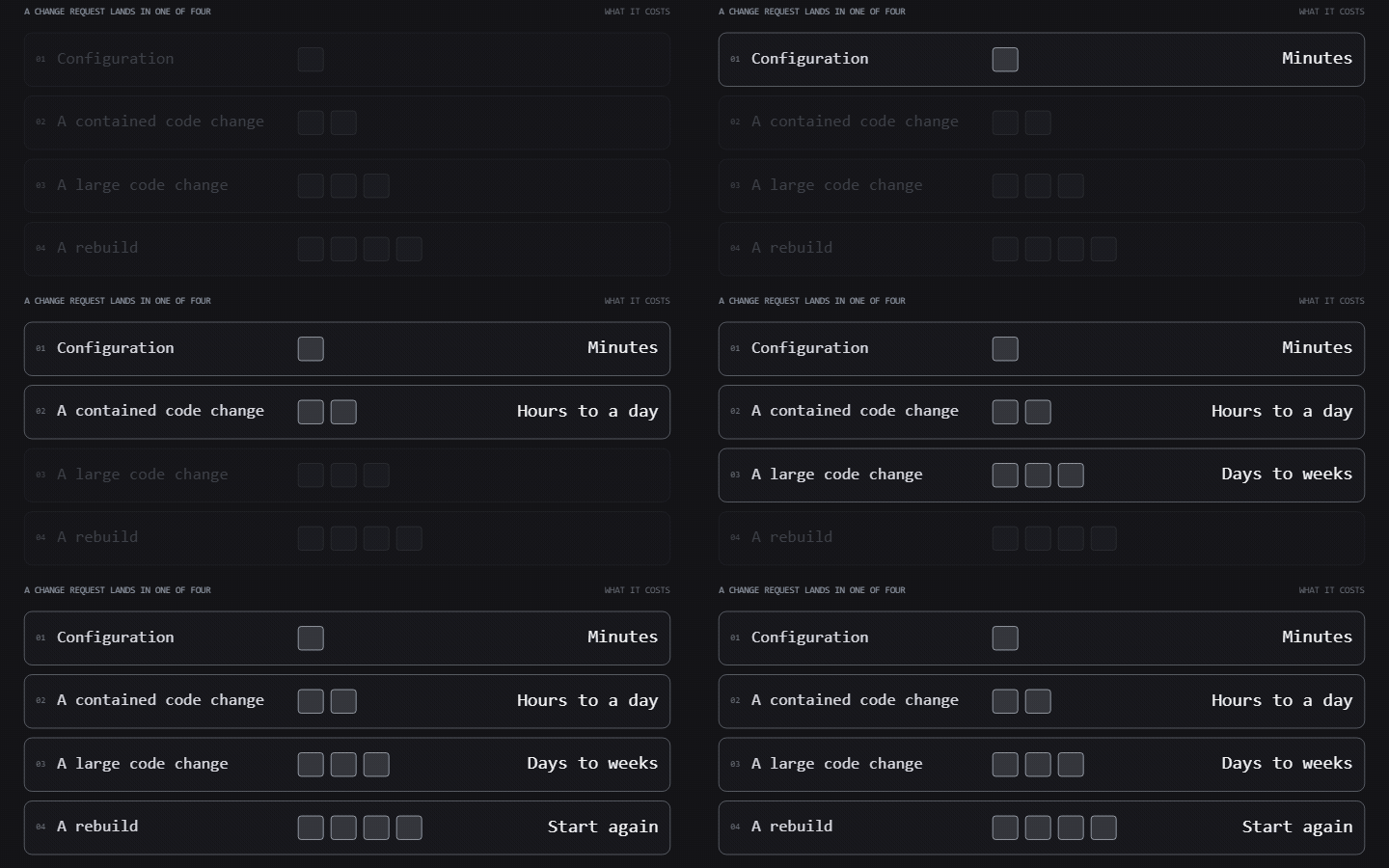
What it meansA value already exists for this. Thresholds, keys, caps, windows, which provider is primary
What it costsMinutes.No deploy, no review, no risk to anything else
What it meansA new rule beside the existing rules, with a test beside it
What it costsHours to a day.One place to edit, one thing that can break
What it meansSomething coupled crosses a seam. A new channel, a new platform, a change to what the model returns
What it costsDays to weeksand it should be quoted as such before the work starts
What it meansThe assumption underneath the data model changed
What it costsStart again on that partand anyone honest says so up front
Ask a shop what happens when requirements change in six months and you tend to get a posture rather than an answer. Flexible. Modular. Built to scale. None of that survives contact with a specific request.
The useful version is boring: name the four buckets, then say which bucket a given change falls into and why. Every system has all four. What separates them is where the line sits, and a team that has operated its own systems can draw that line without thinking about it.
These are OCTYN's own, and each one is written down before it is asked for, which is the point.
Not because the tool is bad. Because of where the logic is kept.
In a built system, the rule that decides something is a named thing in a file, next to a test that fails when it is wrong, with a commit message saying why it was written. Six months later you can find it by searching for what it does, change it, and know from the test whether you broke anything.
In a glued workflow, the rule is the shape of the connections. There is no name to search for, the reason it was drawn that way is not recorded anywhere, and the only way to know whether a change broke something is to run it and see. That is fine at three steps. At thirty, a small change becomes an afternoon of clicking, and the person who drew it has usually left.
This compounds with the person, not the tool. Most glue is built by whoever needed it, in the tab they had open, and the reason is in their head. A rebuild six months later is often not a technical judgement. It is that nobody left can explain what the thing was supposed to do.
Take the three changes you are most likely to want in six months. Not hypotheticals: the ones already half-discussed. Ask which bucket each lands in and why.
The answer tells you two things. Whether they have thought about change at all, and whether they will tell you the expensive answer when it is the true one. Anyone who puts all three in configuration is either selling or has not built it yet.
Every claim above comes from a system OCTYN built and operates. Each line carries the date it was recorded and where it came from, so it can be argued with rather than taken on trust.
A new provider is an afternoon, a new expense field is a day, and shared team accounts is a storage rewrite. Written down before being asked
docs/growth/case-studies/mooney.md, section 7Mooney →Three tenant configs run on one lead engine, each a JSON file of sources, weights, thresholds and market
WhoFits Lead Scraper docWhofits Agency →A third aarttsii tenant runs on the same outreach engine with a completely different ICP, which is what proves the separation holds
docs/growth/case-studies/aarttsii.md, section 7Changing the definition of an interaction edge is a rebuild, because the collection window cannot be replayed
docs/growth/case-studies/whofits.md, section 7WhoFits →Bring the version of this question that is actually about your operation.
Book a call →